
Not all probes are equal: here’s how to avoid the most common mistake
What is a perineal probe?
A perineal probe is an endocavitary (vaginal or anal) medical device used in perineal rehabilitation.
It can be used to:
⇒ stimulate muscles via electrostimulation
⇒ measure contraction using biofeedback
⇒ guide the patient in muscle training
Scholarly societies and clinical guidelines recognize electrostimulation and biofeedback as tools used to complement active exercises, particularly when voluntary contraction is difficult at first.
However, there are still variations in protocols depending on the practitioner and clinical situation. It is therefore important to remember that a probe is never a substitute for a medical diagnosis.
Perineal probe: how to choose the right model for effective rehabilitation?
The perineal probe is now a key tool in pelvic floor rehabilitation. However, with so many different models available, many patients feel lost.
Which shape should you choose?
Should you opt for pressure or electrostimulation?
Are all probes compatible with all devices?
Choosing a probe at random is a bit like buying glasses without an eye test: sometimes it works… but often, you miss the point.
Vaginal probe or anal probe: how do you know?
The choice depends mainly on:
♦ your anatomy
♦ your medical condition
♦ the advice of your healthcare professional
Vaginal probe
Used in women to exercise the pelvic floor vaginally. It is frequently recommended after childbirth, in cases of mild prolapse or stress incontinence.
Anal probe
Used in men (particularly after prostate surgery) or in women for certain specific disorders.
There is no such thing as a “best” universal probe.
There is a probe that is right for your situation.
The essential criteria for choosing a perineal probe
1) The therapeutic objective
Would you like to:
→ strengthen a weakened pelvic floor?
→ improve stress urinary incontinence?
→ work after surgery?
→ prevent a prolapse from worsening?
The type of stimulation may vary depending on your needs.
2) Pressure or electrostimulation?
Some probes are designed for pressure-based rehabilitation (biofeedback).
Others are designed for muscle electrostimulation.
In some cases, the two approaches can be complementary.
At Sugar, we believe that the choice should always be guided by an initial assessment. Technology is no substitute for clinical evaluation.
3) Shape and comfort
Not all probes have the same shape:
♦ cylindrical
♦ anatomical
♦ with side electrodes
♦ with rings
Good contact with the vaginal or anal wall is essential for effectiveness.
Repeated discomfort often leads to discontinuation of treatment. And interrupted rehabilitation is rarely effective.
4) Compatibility with your device
Not all probes are universal.
Check:
→ the type of connection
→ compatibility with your electrostimulator
→ the manufacturer’s recommendation
It is a common mistake to buy a probe without checking the connection.
Is it absolutely necessary to consult before buying?
Yes.
Even though some probes are available for purchase online, it is strongly recommended that you consult a healthcare professional.
Why?
Because:
⇒ Not all disorders require the same treatment.
⇒ Incorrect use can delay improvement.
⇒ Certain situations (advanced prolapse, infection, complex pelvic pain) require specific monitoring.
There are still areas of uncertainty in the scientific literature regarding the precise indications for each technology. Support therefore remains key.
The financial aspect: investment or expense?
In the short term, some people are reluctant to invest in a perineal probe.
However:
→ Prescribed perineal rehabilitation is mostly reimbursed by the CPAM (French national health insurance).
Some probes may be covered depending on the prescription and nomenclature.
Conversely, absorbent pads seem simple and quick… but they do not treat the cause.
In the long term, strengthening your perineum is often more cost-effective than compensating for the symptoms.
The most common mistakes
Choosing based solely on price
Ignoring technical compatibility
Not consulting before purchasing
Giving up too soon
The perineum is rehabilitated like a muscle after a sprain: it requires regularity and method.
Financial point: protections or rehabilitation?
In the short term, protective measures seem:
• cheaper
• simpler
• immediate
But in the long term:
• they cost more
• they don’t address the cause
• they alter quality of life
⇒ Perineal rehabilitation is mostly reimbursed by the CPAM (French national health insurance) when prescribed by a doctor.
At Sugar, our opinion is clear: treating the cause is always more sustainable than masking the symptoms.
When to consult?
If you experience:
→ a lump
→ persistent discomfort
→ a feeling of “descent”
It is essential to consult a healthcare professional (midwife, physical therapist, gynecologist, urologist).
Every situation is different, and there are still areas of uncertainty depending on body type and medical history.
In conclusion
What your body whispers to you today may become a cry tomorrow… or renewed strength if you act in time.
At Sugar, we believe that the pelvic floor deserves as much attention as any other muscle.
What if the first step was simply to talk about it?
FREQUENTLY ASKED QUESTIONS
Discover the questions most frequently asked by Internet users
Does a lump in the vagina necessarily mean prolapse?
No. It could also be muscle tension or a functional disorder.
Can prolapse disappear?
It can improve with proper care.
Is rehabilitation painful?
No, it is progressive and appropriate.
Can men be affected?
Yes, especially after prostate surgery or repeated straining.
Stability and pelvic floor: are you making a mistake without realizing it?
Is core training good for the perineum? Learn about common mistakes, risks to the pelvic floor, and how to protect your perineum during exercise.
Lump in the vagina: is it prolapse? Causes, signs, and solutions
A lump-like sensation in the vagina may be a sign of prolapse or a weakened pelvic floor. Learn about the causes, symptoms, and non-surgical solutions.
Weak pelvic floor: causes, symptoms, and solutions
A weak pelvic floor can have many impacts on daily life (discomfort, leakage, feelings of heaviness, pain). Discover the causes, warning signs, and practical solutions, from rehabilitation to medical devices, with verified and accessible advice.
Prolapse and urinary incontinence: what non-surgical solutions exist in 2026?
Genital prolapse and urinary incontinence: non-surgical solutions, pessaries, pelvic rehabilitation, medical care and current recommendations.
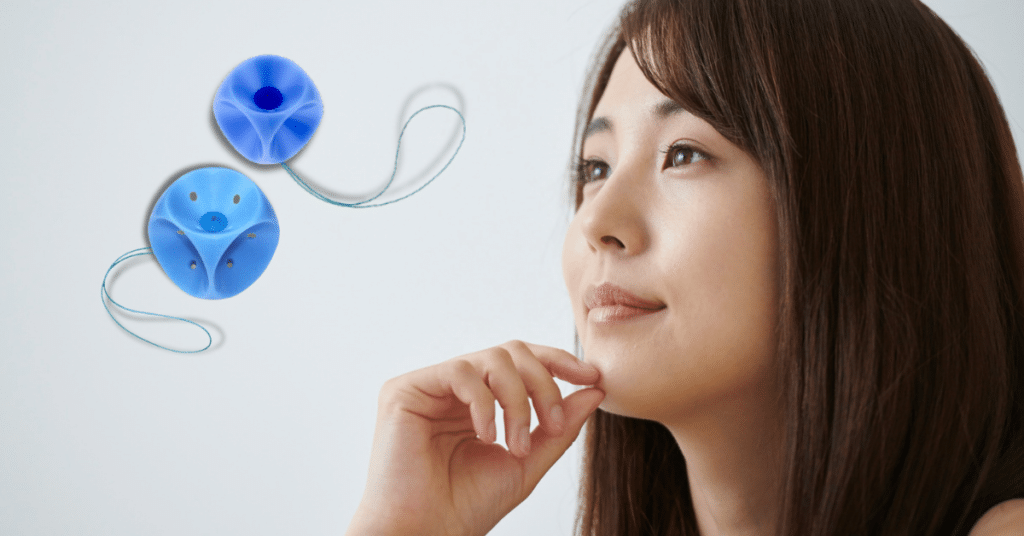
Pessaries: the unknown solution for prolapse and urinary incontinence?
Find out what vaginal pessaries, perforated or otherwise, are used for to relieve prolapse and urinary incontinence, how they work, and why they are now reimbursed by the CPAM when prescribed.
Why is perineal rehabilitation important for men?
The importance of pelvic floor rehabilitation is not limited to women. Men also have a pelvic floor, and when it is weakened, it can affect continence, sexual function, and quality of life. Discover why this rehabilitation is beneficial for men.

What is pelvic imbalance?
Pelvic imbalance may go unnoticed, but it affects posture, continence, and quality of life.
Learn about its causes, symptoms, and how to remedy it through perineal rehabilitation.

How does a perineal probe work?
Perineal probes, biofeedback, electrostimulation... How do they work in practice?
Find out about the role of perineal probes, who they are recommended for, and how they fit into effective rehabilitation.
How do I know if I need perineal rehabilitation?
Urinary leakage, unusual sensations, pain, loss of tone... What if your pelvic floor was trying to send you a message? Find out how to recognize the signs that indicate pelvic floor rehabilitation may be beneficial for both women and men.

What is perineal rehabilitation?
The perineum, often overlooked, deserves your full attention!
In this article, discover what perineal rehabilitation is, why it is essential, and how it works.
Take care of your perineum, because it plays a fundamental role in your daily well-being!

